
This article discusses the types of gold-plated waste, the chemical principles of gold stripping technology, the pyrometallurgical process, and a techno-economic comparison of the two approaches. Gold-plated waste is one of the most valuable components of electronic waste—a mobile phone contains approximately 0.03g of gold, and billions of mobile phones are discarded globally each year, accumulating to a amount of gold exceeding the annual production of many gold mines.
One type of electronic waste is referred to by recyclers as “gold-containing waste”—gold-plated layers on PCB boards, gold-plated contacts on connectors, gold-plated CPU pins, and scraps of gold-plated wire… The gold in these wastes adheres to a copper, nickel, or iron substrate in the form of an extremely thin plating layer, typically only 0.05-3 micrometers thick.
The amount of gold is small, but its price is high. A discarded mobile phone contains approximately 0.03g of gold—worth tens of yuan. A discarded computer motherboard contains approximately 0.2g of gold—worth hundreds of yuan. When discarded electronic products are counted in the hundreds of millions, the total amount of this “trace amount of gold” is hundreds of tons—exceeding the annual production of any single gold mine in the world.
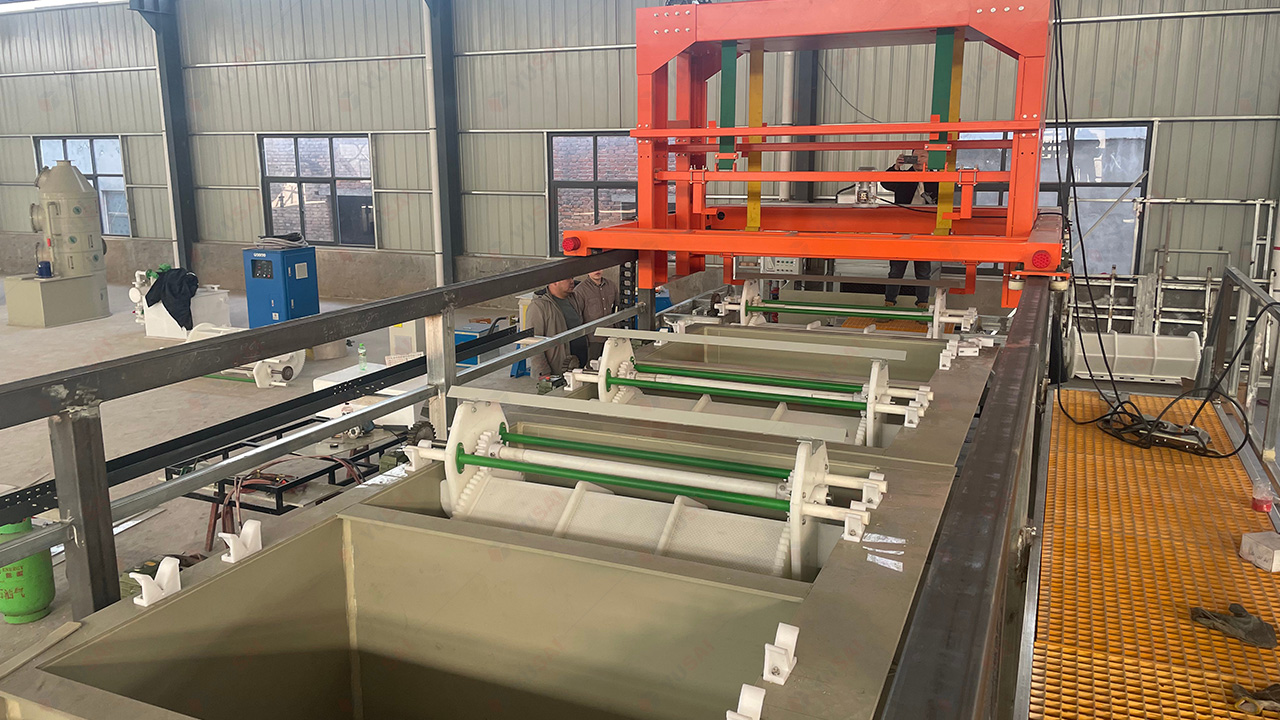
There are two distinct technical routes for recovering gold from gold-plated waste: chemical stripping and pyrometallurgical methods.
Main Types of Gold-Plated Waste
PCB Boards: Gold plating on areas such as gold fingers (edge connectors), BGA pads, and CPU socket contacts. Plating thickness: 0.05-1μm, gold purity >99.9% (bright gold) or gold alloy (hard gold). A single PCB board contains approximately 0.1-1g of gold, depending on its size and the area plating.
CPUs and Chips: Gold plating on CPU pins (leads), with a plating thickness of 0.1-0.5μm. Waste CPUs contain approximately 0.1-0.5g of gold per chip. Gold wires (bonding wires) are also present on the silicon chips inside the CPU, with a diameter of approximately 25μm and a length of approximately 2-5mm.
Connectors: Gold plating on the contacts of various types of connectors (USB, HDMI, header pins, etc.). Gold plating thickness: 0.5-3μm (hard gold).
Gold-plated wire and scraps: These are scraps of gold-plated copper wire and stamping waste from gold-plated terminals generated during electroplating production. These scraps have a high gold content (due to large-area gold plating) and are regularly shaped, making them easy to process.
Gold-plated jewelry waste: Waste generated during the processing of gold-plated jewelry (shavings, polishing dust, waste plating solution, etc.). The gold content is low, but the total amount is large.
Route 1: Chemical gold stripping
The principle of chemical gold stripping is: using chemical reagents to selectively dissolve the gold plating layer without corroding the substrate (copper, nickel, iron). The dissolved gold solution is then reduced back to metallic gold powder.
Method A: Cyanide Gold Removal
Removal Solution: 5-10% NaCN + 1-2% NaOH + appropriate amount of oxidant (sodium m-nitrobenzenesulfonate or H₂O₂)
Reaction Principle: Au + 2NaCN + ½O₂ + H₂O → Na[Au(CN)₂] + 2NaOH
Gold is oxidized to [Au(CN)₂]⁻ and dissolved in the cyanide solution. The oxidant (O₂ or H₂O₂) provides the oxidation motive force. Copper and nickel matrices dissolve slowly in alkaline cyanide—good selectivity.
Advantages: Fast gold removal speed (10-30 minutes), high gold recovery rate (>99%), matrix can be recycled and reused.
Disadvantages: Cyanide is highly toxic, posing a high safety risk. The gold removal solution requires cyanide removal treatment before discharge.
Gold Recovery: Gold is recovered by zinc powder replacement or electrolysis in the gold stripping solution.
Method B: Aqua regia gold stripping
The gold-plated waste is directly immersed in aqua regia (HNO₃:HCl = 1:3). Gold is dissolved to HAuCl₄, and copper and nickel are also dissolved—there is no selectivity.
Advantages: Simple operation, no special reagents required.
Disadvantages: A large amount of the base metal (copper, nickel) is dissolved, consuming a large amount of acid, resulting in many impurities in the subsequent gold solution, making purification difficult. Only suitable for processing waste with high gold content and small base metal content (such as pure gold wire waste).
Gold Recovery: After removing nitric acid with the aqua regia solution, the gold is reduced with sodium sulfite or oxalic acid.
Method C: Iodide gold stripping
Gold stripping solution: KI + I₂ (iodine-potassium iodide solution)
Reaction principle: Au + I₃⁻ → AuI + I₂ + e⁻ (simplified) Gold is oxidized by iodine to AuI (gold iodide) and dissolved. Advantages: Non-toxic (cyanide-free), fast gold stripping (5-10 minutes), minimal matrix erosion.
Disadvantages: High iodine price, resulting in high cost of the gold stripping solution. Iodine is volatile, requiring sealed operation.
Gold Recovery: Gold is recovered using electrolysis or zinc powder replacement of the gold stripping solution. The iodide solution can be regenerated and recycled.
Method D: Thiourea Gold Stripping
Gold Stripping Solution: 5-10% thiourea (CS(NH₂)₂) + appropriate amount of oxidant (Fe³⁺ or H₂O₂) + acid (H₂SO₄)
Reaction Principle: Au + 2CS(NH₂)₂ + Fe³⁺ → [Au(CS(NH₂)₂)₂]⁺ + Fe²⁺
Gold is oxidized and dissolved through coordination with thiourea.
Advantages: Non-toxic (thiourea is far less toxic than cyanide), moderate gold stripping speed (30-60 minutes).
Disadvantages: Thiourea is unstable under acidic conditions (decomposes into elemental sulfur and CN⁻), short solution life. Thiourea is relatively expensive.
Route Two: Pyrometallurgy
The principle of pyrometallurgy is: gold-plating waste is smelted with flux at high temperature, copper (or other base metal) acts as a collector to absorb gold, forming a copper-gold alloy. Then, copper is electrolytically refined, and gold is enriched in the anode slime (see article on anode slime recycling).
Process Flow:
Pretreatment: Waste PCB boards and other electronic waste are first dismantled and crushed, separating the metallic components (copper, iron, aluminum, precious metals) and non-metallic components (resin, glass fiber).
Smelting: The metallic components are mixed with flux (quartz sand, limestone, iron ore) and smelted in a furnace at 1200-1400 degrees Celsius. After copper melts, it forms “matte” (Cu-Fe-S alloy) or crude copper, with gold and silver dissolved within. Non-metallic components form slag.
Converter blowing: The matte undergoes oxygen desulfurization in a converter to obtain crude copper (containing 98-99% Cu). Gold remains in the copper.
Electrolytic refining: In the electrolytic refining of crude copper, copper is deposited at the cathode (purity >99.99%), while gold and other precious metals enter the anode slime.
Anode slime treatment: Gold, silver, and platinum group metals are recovered from the anode slime according to standard procedures (see the article on anode slime).
Advantages:
Large Processing Capacity: Can process entire PCB boards without requiring detailed disassembly.
Comprehensive Recycling: Simultaneously recovers gold, silver, copper, and platinum group metals.
Mature Technology: Copper smelting technology has a century-long history.
Disadvantages:
High Investment: Requires the construction of smelting furnaces, converters, and electrolysis workshops.
High Energy Consumption: Smelting at 1200-1400 degrees Celsius.
Environmental Challenges: Plastics and brominated flame retardants in electronic waste generate toxic gases such as dioxins during smelting.
Long Gold Recovery Cycle: Takes several weeks from initial feeding to gold extraction from the anode mud.
Techno-economic Comparison of the Two Routes
Parameters
Chemical Gold Retardation
Pyrometallurgy
Applicable Waste: Gold-plated parts, connectors, CPU pins; entire PCB boards; mixed electronic waste
Gold Recovery Rate: 95-99%; 96-99%
Base Metal Recycling: Recyclable (cyanide/iodine method, matrix insoluble); Copper is recovered, iron and aluminum are added to slag.
Processing Scale: Small to medium (kg to ton level) Large (tons to hundreds of tons)
Investment Threshold: Low (reactor + ventilation equipment) High (smelting furnace + converter + electrolysis)
Environmental Risks: Cyanide toxicity/acid mist, dioxins/heavy metal fumes
Gold Recovery Cycle: Hours to days, weeks to months
Suitable Enterprises: Small recycling companies, large smelters
Selection Logic:
Small waste volume, single type (e.g., pure gold-plated connectors) → Chemical gold stripping is more economical
Large waste volume, complex type (e.g., whole scrap PCB board) → Pyrometallurgical process is more economical
Waste contains multiple precious metals (gold + silver + palladium) → Pyrometallurgical process has high comprehensive recovery value
Waste contains only gold → Chemical gold stripping directly extracts gold, shorter process
Hybrid Strategies in Actual Recycling
Large electronic waste recycling companies typically adopt a hybrid strategy of “gold stripping first, then pyrometallurgical”:
Chemical gold stripping first: Selectively strip gold from high-gold-content components on PCB boards (gold fingers, CPU sockets, connectors). Local treatment with iodide or cyanide gold stripping solutions can recover 90-95% of the gold.
The waste after gold stripping is then processed using pyrometallurgical methods: The stripped PCB boards (with significantly reduced gold content) are fed into a copper smelting furnace to recover copper and residual precious metals.
The advantages of this strategy are:
High-gold components recover most of the gold using efficient methods first, reducing gold loss during pyrometallurgical processing.
The reduced gold content in the stripped waste results in a more uniform gold content in the anode slime from pyrometallurgical processes.
The two technologies complement each other, maximizing the overall recovery rate.
Environmental challenges of gold plating waste recycling:
Environmental issues with chemical gold stripping:
Cyanide waste requires cyanide removal treatment (alkaline chlorination).
Aqua regia gold stripping produces NOx gas (brown fumes), requiring gas scrubbing.
Waste acid waste contains heavy metals (Cu²⁺, Ni²⁺), requiring neutralization and precipitation.
Environmental issues with pyrometallurgical processes:
Plastics in electronic waste (approximately 30-40% by weight) burn during smelting, producing CO₂. HBr, Dioxins
Brominated flame retardants (such as polybrominated diphenyl ethers) decompose into brominated dioxins at high temperatures—highly toxic.
Volatile heavy metals such as lead and mercury evaporate during smelting, requiring efficient dust removal.
Slag contains heavy metal leachates, requiring safe landfill.
Modern electronic waste pyrometallurgical recycling plants are equipped with:
Secondary combustion chamber (>1100 degrees Celsius, ensuring complete decomposition of organic matter)
Quick cooling tower (rapidly cools flue gas, preventing dioxin formation in the 200-400 degree Celsius regeneration range)
Activated carbon injection (adsorbs dioxins and mercury)
Bag filter (captures particulate matter)
Wet scrubbing tower (deacidification and desulfurization)
Gold in urban mines
A mobile phone contains 0.03g of gold—negligible. However, approximately 1.5 billion mobile phones are discarded globally each year, containing a total of about 45 tons of gold. Including discarded computers, home appliances, and industrial electronic waste, the gold content in global e-waste is estimated at several hundred tons per year—equivalent to 10-15% of global annual gold production.
Extracting one gram of gold from a gold mine requires processing approximately one ton of ore (ore with a grade of 1 g/t). Extracting one gram of gold from e-waste requires processing approximately 30-100 grams of waste material (PCB boards contain approximately 100-300 g/t of gold). The gold grade in e-waste is 100-300 times that of gold ore—this is why e-waste is called an “urban mine.”
However, urban mining is more complex than natural mining—e-waste has diverse compositions, precious metals exist in trace thin layers, organic and inorganic matter are mixed, and hazardous substances require treatment. Chemical gold stripping and pyrometallurgical methods each have their advantages and disadvantages, and in practice, they are often used in combination.
Understanding the principles, applicable scenarios, and environmental requirements of these two methods is the technical threshold for entering the e-waste recycling industry. Every gram of gold recovered from discarded mobile phones means a reduction of one ton of ore mining and cyanide leaching—this is the substitution effect of “urban mining” on natural mines, and the ultimate meaning of resource recycling.