Gold Stripping & Gold Recovery Solutions for Gold‑Plated Scrap and Electroplating Waste Liquids
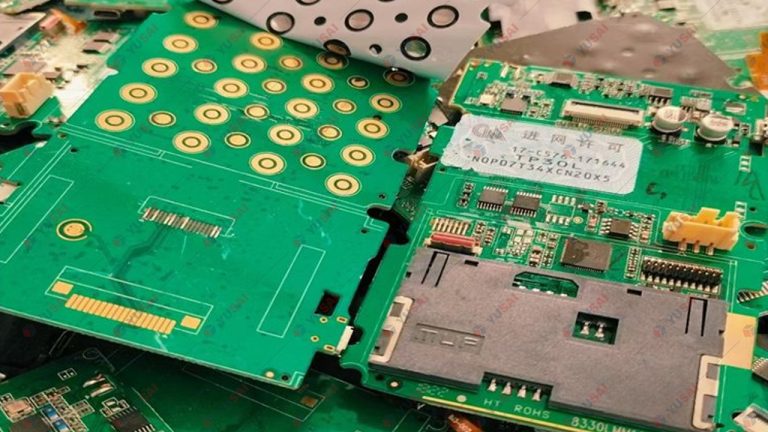
Gold‑plated scraps and spent electroplating baths contain considerable gold values. Professional gold‑stripping chemicals, adsorption media, displacement materials and supporting refining equipment enable efficient gold recycling, lower material loss and improve resource utilization for electroplating factories, PCB processors and precious‑metal refiners.
1. Classification of Spent Gold‑Plating Liquids
Spent gold‑plating solutions fall into three typical categories based on chemical systems:
- Alkaline cyanide‑bearing gold‑plating solution: pH 8‑12, dominated by potassium dicyanoaurate complexes.
- Acid‑to‑neutral cyanide‑bearing gold‑plating solution: pH 3‑7, citrate‑based gold plating bath.
- Alkaline cyanide‑free gold‑plating solution: pH 8‑10, thiosulfate‑gold complex system.
According to gold concentration, waste liquors are grouped into high‑grade (0.5‑2.0 g/L, direct recovery), medium‑grade (0.1‑0.5 g/L, requires evaporation concentration) and low‑grade (0.001‑0.1 g/L, requires pre‑enrichment before metal extraction). For dilute streams, concentration methods include thermal evaporation, resin adsorption‑elution and solvent extraction to lift gold content for downstream processing.
2. Gold‑Adsorbing Media for Gold‑Bearing Waste Liquids
2.1 Gold‑Absorbing Mesh & Gold‑Absorbing Paper
Specially engineered for gold recovery from cyanide‑gold and aurocyanide waste solutions. Visible golden metallic gold deposits form directly on the material surface during treatment. Fast adsorption kinetics deliver a maximum mass‑ratio adsorption capacity up to 300%. Post‑processing workflow is simple, and recovered gold presents good fineness. Small‑lot trial samples are available for process validation before bulk adoption.
2.2 Selective Gold‑Recovery Ion‑Exchange Resin
Spherical alkaline anion‑exchange resin with tailored pore architecture and functional groups, delivering high selectivity toward gold‑cyanide complexes.
Main Features:
- Saturated adsorption capacity ranges from 10%‑16% by weight; adsorption speed is over 5 times faster than ordinary coconut‑shell activated carbon. Series‑connected adsorption columns further boost processing efficiency.
- Good anti‑interference performance against base‑metal ions including copper, nickel, iron and lead. Resin can be cleaned with pure water or sodium chloride solution.
- Broad operating pH adaptability; works for cyanide‑containing plating waste, PCB stripping liquors, heap‑leach mining pregnant solutions, aqua‑regia dissolved gold solutions.
- Flexible downstream options: chemical elution followed by hydrometallurgical refining, or direct carbonization & incineration to yield crude gold particles.
- Effectively treats ultra‑dilute gold streams as low as 1 ppm gold concentration, minimizing precious‑metal waste from low‑grade effluents.
Typical Application Scenarios: Gold‑plating bath waste, PCB gold‑stripping fluids, gold‑mine heap‑leach & tank‑leach pregnant/barren liquors, aqua‑regia gold‑dissolving solutions.
3. Galvanic Displacement Material (Fe‑Al‑based sponge‑type reducing medium)
This sponge‑like composite material uses iron as the structural skeleton and aluminum as the reactive component. It builds strong galvanic cell potential difference under both acidic and alkaline environments, reducing monovalent and trivalent gold ions into metallic gold. Precipitated gold adheres firmly onto the iron‑based framework without fine‑particle drifting.
Comparison vs common gold‑recovery reagents
- Compared with zinc / aluminum powder displacement Zinc or aluminum powder relies on high specific surface area, yet fine particles create severe settling difficulty. Long sedimentation time or high‑speed centrifugation is mandatory for complete gold capture. Excess zinc/aluminum reacts with acid or alkali to generate hydrogen gas and further slows separation. Strict pH adjustment (pH≈1 for acid, pH≈12 for alkaline) is required. The sponge‑type galvanic medium needs no sedimentation step and tolerates hydrogen evolution. Gold loss remains low even without centrifugal equipment.
- Compared with activated carbon / ion‑exchange resin enrichment Activated carbon and resin concentrate gold via adsorption, producing loaded carbon/resin that demands further elution or incineration. The sponge displacement material features theoretical loading capacity around 3 kg gold per kg medium, with simplified subsequent processing.
- Compared with organic reducing agents Organic reductants often deliver incomplete gold reduction and shift solution pH during reaction, requiring frequent pH correction and skilled operation. Reduced gold forms ultra‑fine particles with long settling cycles; uncontrolled chemical‑plating may coat gold onto tank walls and submerged fixtures. The Fe‑Al sponge‑type material avoids all above drawbacks.
Best‑suited for operators processing gold‑plating stripping effluents: short processing cycles, simplified handling of toxic cyanide‑containing streams, easy post‑treatment and low professional‑skill threshold.
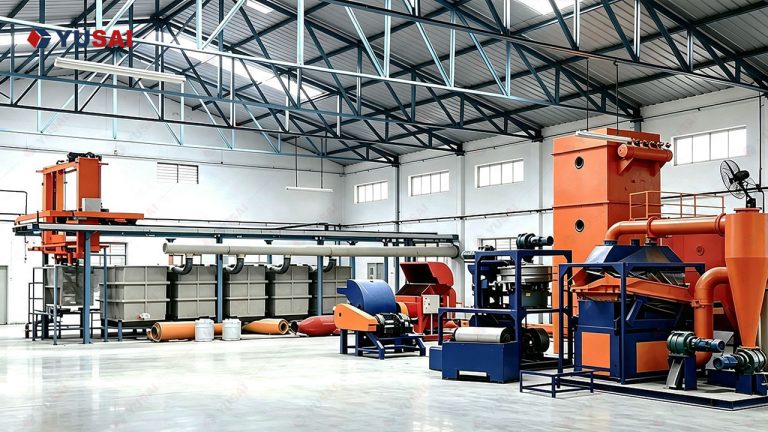
4. Process Equipment for Gold‑Plated Scrap Recycling
4.1 Automated Two‑Operator Gold‑Stripping Production Line
| Parameter | Specification |
|---|---|
| Input Voltage | 220 V |
| Rated Power | 6 kW |
| Tank Volume | 50 kg working load |
| Throughput | 50 kg material per 20 minutes |
| Workable Feedstock | Solid gold‑plated metal scraps |
| Overall Dimension | 3000 × 1200 × 700 mm |
| Unit Weight | 350 kg |
4.2 Non‑Electrolytic Desorption‑Precipitation Unit for Gold‑Loaded Carbon
Purpose‑built equipment for desorbing gold from gold‑bearing activated carbon, eliminating electrolytic circulation and cutting power consumption.
- One full desorption cycle takes only 8‑10 hours for high throughput.
- Desorbed pregnant gold solution mixes with dedicated precipitant to generate gold mud reaching ~95% purity, ready for direct melting after high‑temperature treatment.
- Quick installation and short operator‑training period; spent carbon can be regenerated and reused repeatedly to improve capital turnover.
- Adopts pure‑water desorption to cut chemical consumption and operational costs. Open‑system design without high temperature or high pressure enhances operational safety; desorption and precipitation can run simultaneously. Stable performance reduces gold hanging‑up and material loss.
4.3 Medium‑Frequency Mini Gold‑Melting Furnace
Compact melting furnace for crude gold smelting after recovery from stripping solutions or adsorption media, supporting small‑batch precious‑metal casting and sample melting.
5. Gold Refining Process: Pour‑Granulation (Inquartation & Parting) Method
A proven workflow to upgrade crude dore gold purity:
- Alloy melting: Mix dore gold with silver at silver‑to‑gold mass ratio 2.2‑3.0 : 1. Place dore gold at crucible bottom and silver on top.
- Slag removal: Skim surface slag with borax flux once fully molten.
- Homogenizing stirring: Agitate molten alloy using carbon‑tipped wooden rod for uniform composition.
- Water granulation: Maintain vigorous stirring in a 2/3‑filled ceramic water vat; pour thin stream of molten alloy into agitated cold water. Faster water agitation and slower pouring produce finer metal granules.
- Acid parting: Transfer granules into angled Erlenmeyer flasks to prevent thermal shock breakage. Add nitric acid slowly for initial silver dissolution; heat when reaction slows. Decant silver‑nitrate liquor and add concentrated nitric acid, boil for 40 minutes and repeat once. Longer boiling time is recommended for 2.2 : 1 silver‑gold ratio.
- Washing: Rinse gold powder repeatedly with hot water until no white precipitate appears in waste water, plus five extra rinse cycles. The resulting reddish‑brown gold powder achieves ~99.8% purity.
Silver recovery from parting waste water: Dilute silver‑bearing acid effluent with 5‑10 volumes of water, immerse copper sheets for cementation. Cease operation once silver deposition stops on copper surfaces and filter solids. Recovered silver reaches ~99% purity with ~98% overall silver recovery rate.
6. Available Technical Routes for Gold Recovery from Electroplating Waste Liquids
Multiple technical routes are selectable based on solution chemistry, gold concentration and site‑specific conditions:
- Chemical reduction method: Apply for cyanide‑bearing waste baths of high‑to‑medium gold concentration. Several alternative reductants can produce high‑fineness crude gold for further refining.
- Metal cementation / displacement method: Separate acidic‑condition and alkaline‑condition sacrificial‑metal options. Displaced crude gold needs impurity removal before final refining.
- Cyanide‑destruction pre‑treatment plus reduction: Destroy cyanide complexes ahead of gold reduction to enhance recovery efficiency and limit impurity introduction.
- Direct precipitation: Designed for cyanide‑free alkaline gold‑plating waste streams of high‑to‑medium concentration, delivering relatively pure gold precipitates.
- Resin enrichment‑elution process: For low‑gold‑content cyanide‑bearing effluents. Use anion‑exchange or chelating resin to capture dilute gold; elute to generate high‑grade pregnant liquor, then recover gold by evaporation or chemical precipitation.
- Solvent‑extraction enrichment: Suitable for dilute cyanide‑gold waste streams. Gold complexes transfer into organic phase; gold is later recovered by distilling organic phase or precipitation.
- Crude‑gold final‑refining technologies: Aqua‑regia reduction, chlorination refining, ammonium‑chloride refining, upgrading crude gold up to 99.9% purity.