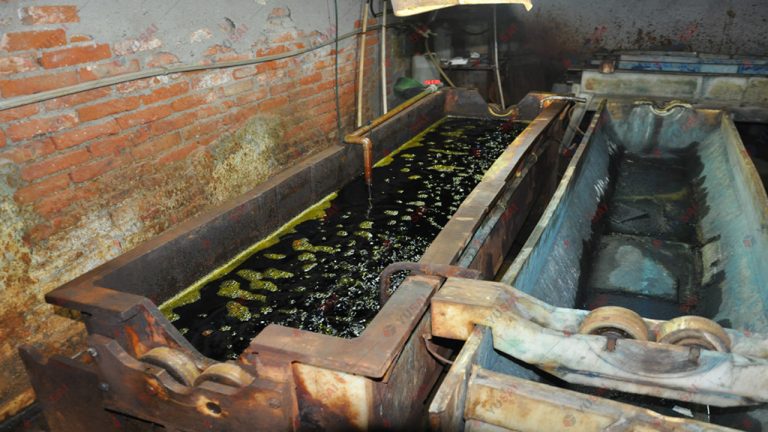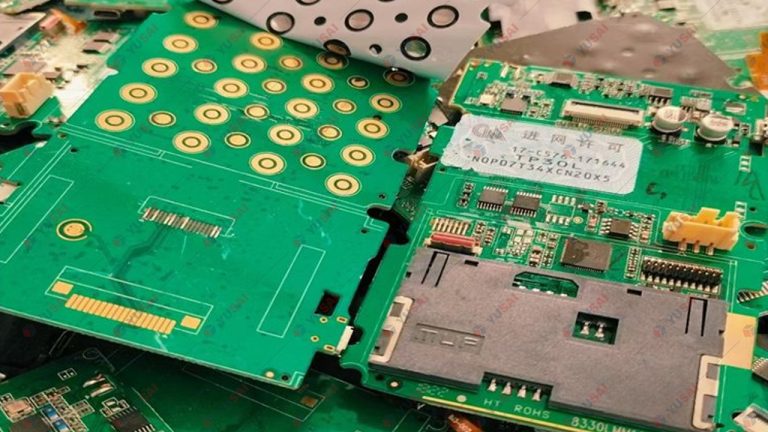
Gold can be stripped from gold-plated scrap using either pyrometallurgical or chemical methods. In the pyrometallurgical process, the scrap is immersed in a bath of molten lead (melting point: 327°C), allowing the gold to diffuse into the lead. The stripped scrap is removed, and the gold-bearing lead is cast into “rich lead” plates; gold is then recovered from this alloy via cupellation or electrolysis. During cupellation, silver may be added to form a gold-silver alloy, which is water-quenched into granules; these are then treated with nitric acid to separate the gold powder, which is subsequently melted and cast into crude gold. Hydrochloric acid is added to the nitric acid solution to precipitate any silver.
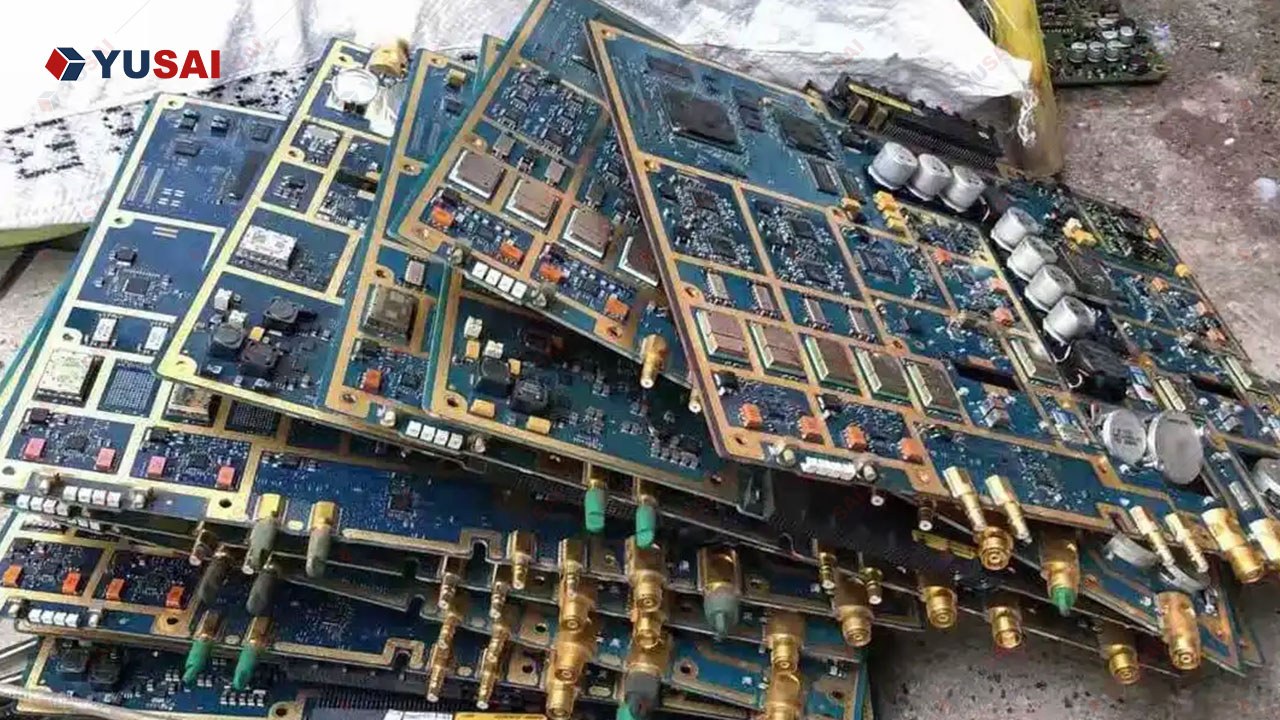
In the chemical stripping process, the scrap is immersed for 1–2 minutes in a stripping solution heated to 90°C, causing the gold to dissolve into the solution. The solution is prepared by dissolving 75 g of NaCN and 75 g of sodium m-nitrobenzenesulfonate in 1,000 mL of water. If the stripping capacity is exceeded or the solution becomes saturated with gold—preventing further stripping—a fresh solution must be prepared. After stripping, the scrap is rinsed three times with distilled water, and the rinse water is retained for future use. Each liter of gold-laden stripping solution is diluted with 5 L of water and stirred thoroughly; the pH is adjusted to 1–2 using hydrochloric acid (this step must be performed in a fume hood to prevent cyanide poisoning). Zinc plates or wires are then used to displace the gold from the solution until the yellow color disappears. After the mixture settles, the supernatant is siphoned off; the gold powder is washed with water 1–2 times and then boiled in sulfuric acid to remove impurities such as zinc. Following solid-liquid separation, the gold powder is dried and cast into gold ingots. Alternatively, gold can be recovered from the stripping solution via electrolysis; the spent electrolyte can be replenished with NaCN and sodium m-nitrobenzenesulfonate and reused, though this method involves more complex equipment and processes. A gold-stripping solution formulated with sodium m-nitrobenzenesulfonate, cyanide, and citrate completely removes the gold plating layer within 3–5 seconds. The diluted stripping solution is then subjected to electrowinning—using a stainless steel plate as the cathode and graphite as the anode—at a DC voltage of 6 V, a cathode current density of 0.3–0.5 A/dm², and a temperature of 40–60°C for 4–8 hours; this process achieves a gold recovery rate exceeding 99.5% and a gold purity of 99%.