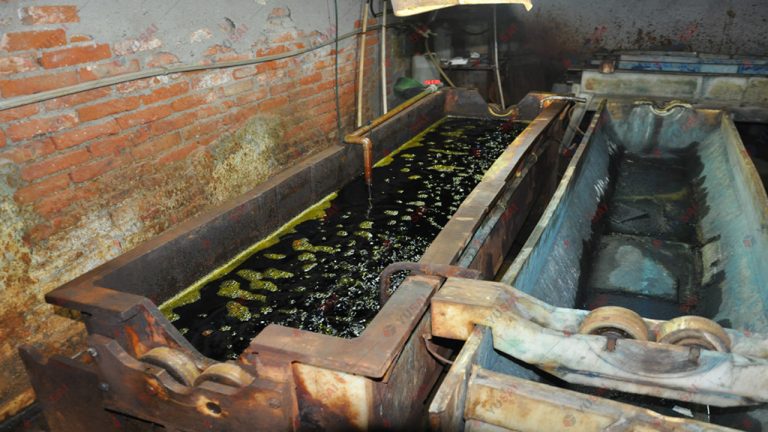
Based on their chemical composition, gold-bearing waste solutions can be categorized into cyanide-based, chloride-based, and aqua regia-based waste solutions, as well as various gold-containing rinse waters.
Gold is typically recovered from cyanide-based waste solutions using the zinc displacement method (employing zinc wire or blocks), while copper displacement (using copper wire or shavings) is generally used for chloride-based solutions. For aqua regia-based waste solutions, gold can be recovered via zinc displacement or by precipitation using various reducing agents, such as ferrous ions, hydrazine hydrate, or sodium borohydride. Additionally, gold can be recovered from these solutions using activated carbon adsorption, ion exchange, or organic solvent extraction.
In principle, metal displacement or chemical reduction methods can be used to treat various gold-containing rinse waters; however, due to the low gold concentration, activated carbon adsorption or ion exchange methods are more economical and practical.
Gold-bearing electroplating waste solutions can be treated to recover gold using electrolytic deposition in addition to the zinc displacement method.