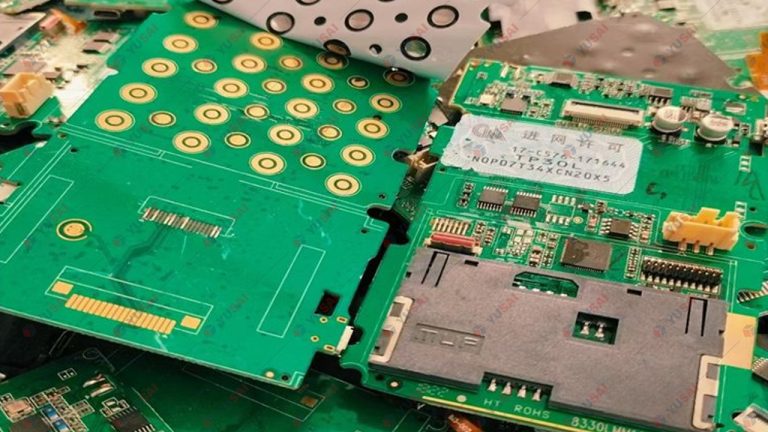
Gold-plated connector pins, contacts and gold-coated PCB pads are valuable feedstocks for precious metal recovery from e-waste. The thin gold plating on base metals requires stripping as a critical pretreatment step. Many people have heard of “aqua regia stripping”. Watching gold coating peel off rapidly and form sponge gold may seem impressive, yet this crude process carries severe safety and environmental risks, and is no longer the preferred method in formal precious metal recycling.
When gold-plated pins are immersed in highly corrosive stripping solutions, the surface gold layer dissolves and peels off quickly, changing the color of the solution. Sponge gold can be precipitated later via reduction. Aqua regia is a mixture of hydrochloric acid and nitric acid. It dissolves gold relying on strong oxidizing power and complexing capacity. Elemental gold is chemically inert; neither hydrochloric acid nor nitric acid alone can corrode gold. In aqua regia, nitric acid acts as a strong oxidizer to oxidize elemental gold into trivalent gold ions (Au³⁺), while hydrochloric acid supplies abundant chloride ions that combine with gold ions to form stable tetrachloroaurate complex ions [AuCl₄]⁻, enabling gold to dissolve continuously into the liquid phase. Once gold fully transfers into the solution, adding reducing agents reduces dissolved gold ions and precipitates sponge gold. Some commercial ready-made stripping solutions contain cyanides, strong complexing agents and oxidants to strip gold plating rapidly.
However, aggressive chemical stripping is a high-risk crude process and must never be operated in non-professional settings. Aqua regia is extremely corrosive. Its reaction continuously releases toxic irritant fumes including nitrogen oxides and chlorine gas, which cause severe respiratory damage. Splashes on skin or eyes lead to deep chemical burns. Cyanide-based stripping liquids are acutely toxic; a tiny amount can be fatal. Improper disposal of waste gas and waste liquid results in permanent soil and water pollution, easily triggering serious safety incidents and heavy environmental penalties.
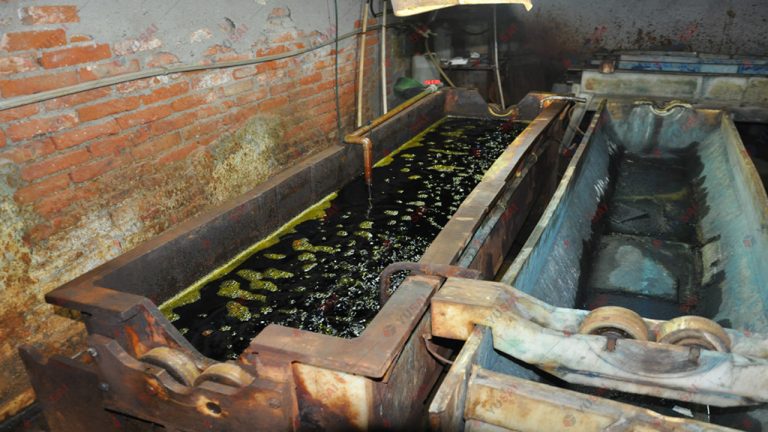
This kind of process is only seen in unqualified small-scale crude recycling workshops. Such workshops only pursue fast stripping speed and simple operation, ignoring hazardous chemical management, protective equipment, tail gas absorption and waste liquid treatment. Neither operator safety nor environmental protection can be guaranteed.
As a manufacturer of precious metal refining equipment, we emphasize: for industrial precious metal recovery, safety, controllability and environmental compliance outweigh reaction speed. Formal precious metal refineries prefer mature processes such as electrolytic gold stripping, physical enrichment and closed hydrometallurgical extraction to replace high-risk aqua regia or cyanide-based chemical stripping.
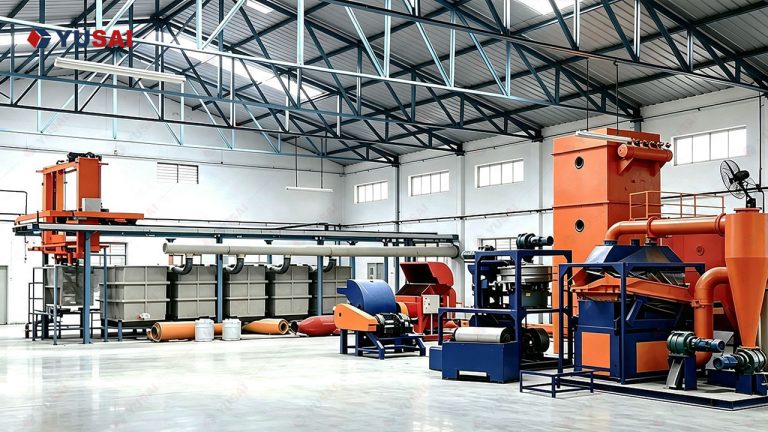
Our professional refining equipment completes gold stripping, precious metal enrichment and solid-liquid separation within a closed reaction system with full process control. It prevents leakage of toxic fumes and centralized collection of waste liquid, greatly lowering operators’ exposure risks to hazardous chemicals while maintaining stable precious metal recovery rates to meet environmental compliance standards. Equipped with built-in tail gas treatment and waste liquid recycling systems, the equipment suits precious metal recovery from PCB scraps, gold-plated connector pins, wasted terminals and various e-waste materials. It eliminates risks of poisoning, explosion and pollution caused by manual crude gold extraction at the hardware level.
Precious metal recovery from electronic waste is far more than a simple chemical experiment. It is a complete industrial systematic project. Wet stripping using strong acid or highly toxic chemicals can only be performed in professional laboratories with hazardous material qualifications, full protection and three-waste treatment systems. Individuals and small workshops are strictly prohibited from unauthorized trials.
Long-term development of the recycling industry cannot rely on dangerous simple chemical methods. Adopting compliant processes together with complete professional precious metal refining equipment balances recovery efficiency, personnel safety and environmental protection. This is the sustainable route for resource utilization of e-waste precious metals. Safety and compliance remain the unshakable bottom line for the precious metal recycling industry.