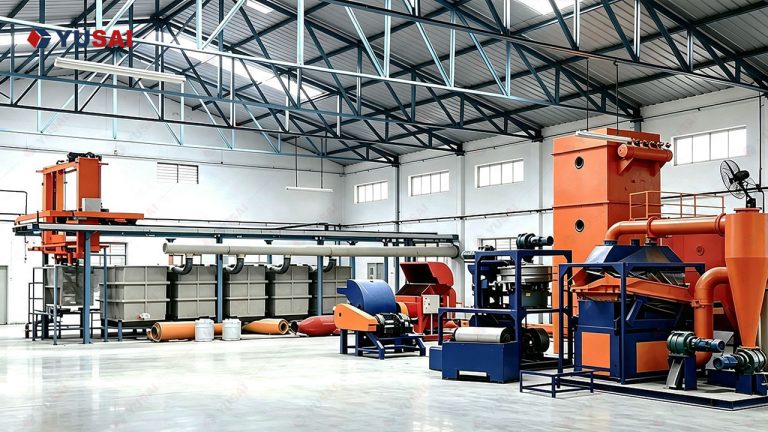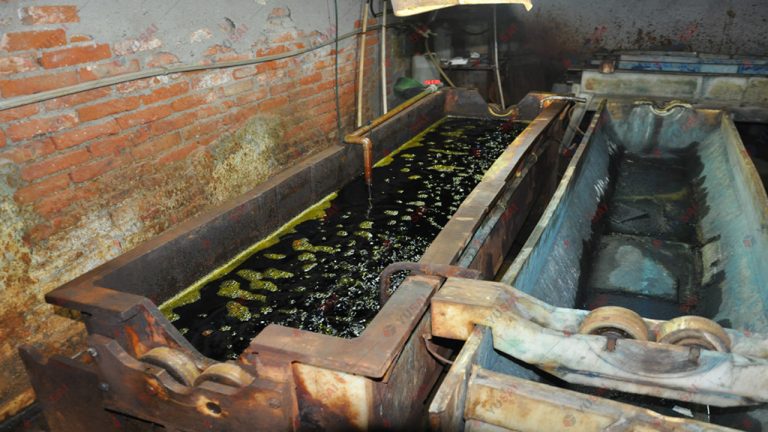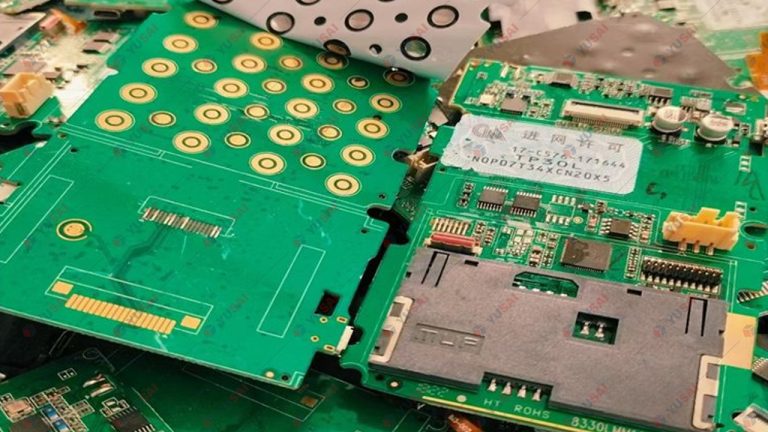
Correct process selection is critical when recovering gold from gold plating rinse water and gold stripping waste liquid. This article introduces three mainstream industrial recovery routes: chemical reduction, electrolytic recovery and ion exchange adsorption, including operating workflows, applicable scenarios and final gold refining procedures for electroplating and PCB precious metal recycling plants.
1. Chemical Reduction Method
Chemical precipitation & reduction is widely adopted for both cyanide and non-cyanide spent gold plating solutions. Multiple reducing agents and destruction routes are available according to bath chemistry.
1.1 Ferrous Sulfate Reduction
Two common operating routes: a. Under fully ventilated conditions, concentrate the waste liquid by heating to 1/3 of its original volume. While stirring continuously, add hydrochloric acid at 1.5 times the solution volume to form gold trichloride precipitate. Add a small amount of hydrogen peroxide and stir until yellow precipitate dissolves, heat until gas evolution stops. Add ferrous sulfate (100 g FeSO₄ per 10 g gold) to reduce metallic gold. Decant the supernatant, wash and filter gold sludge. Boil the precipitate in 1:1 hydrochloric acid for 1 hour to remove zinc impurities, then boil with concentrated nitric acid for 1 hour to strip silver and copper. After washing and drying, the crude gold can be dissolved in aqua regia to prepare fulminating gold, or melted at 1150 ℃ into gold ingots.
b. Concentrate waste liquid to viscous state via water bath heating, dilute with 5 times volume of hot water. Add hydrochloric acid-acidified ferrous sulfate under stirring until no more black gold powder precipitates. Filter and wash sludge with acidified distilled water. The gold powder can be converted into chloroauric acid in aqua regia, or purified by sequential boiling in HCl and HNO₃, dried and cast into ingots.
Alternative reducing agents: ammonium ferrous sulfate, sodium sulfite, sodium bisulfite, ammonium oxalate.
1.2 Zinc / Aluminium Powder Cementation
Adjust pH of spent gold solution to around 1 with hydrochloric acid, heat to 70–80 ℃ under ventilation. Add zinc dust in small batches with stirring to avoid violent splashing. Stop dosing when the brown solution turns translucent pale yellow with abundant black gold precipitate. Maintain pH ≈1 during reaction; nickel, copper and silver will also co-precipitate. Filter and wash sludge, boil in concentrated nitric acid to dissolve excess zinc and base metal impurities. Further refining can be done via aqua regia dissolution followed by reduction with sulfite / ammonium oxalate / ferrous sulfate, or direct melting.
Aluminium foil cementation is another option: first raise pH to 11–12 with sodium hydroxide, then add shredded aluminium foil. Dosage: 1.5–2.9 g Al per gram of gold. The reaction is vigorous with high gold recovery.
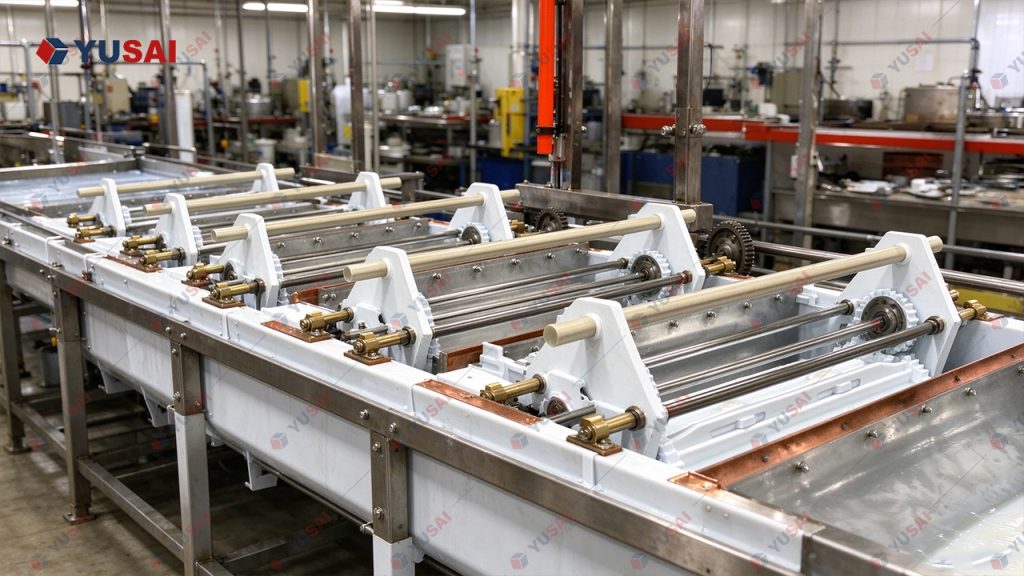
1.3 Sulfuric Acid + Hydrogen Peroxide Destruction for Cyanide Gold Waste
This route effectively decomposes stable Au(CN)₂⁻ complexes and minimizes base metal interference. a. Concentrate spent cyanide gold liquid in water bath, add concentrated sulfuric acid to pH=2, dose H₂O₂ at 2 mL/L while stirring, heat and boil until black gold precipitates and agglomerates. b. Discard yellow / light green supernatant, wash black sediment with distilled water. c. Cover precipitate with analytical-grade concentrated sulfuric acid and boil; drain dark sulfuric acid liquid. Repeat several cycles until the spent sulfuric acid remains clear after boiling. d. Wash and dry the sediment to obtain yellow sponge gold, which can be dissolved in aqua regia or cast into ingots.
Note: Zinc dust, sulfite and organic reducers often fail to fully break down Au(CN)₂⁻. H₂SO₄ + H₂O₂ oxidation decomposes organics, suppresses impurity co-precipitation and delivers high gold recovery.
1.4 Hydrochloric Acid Precipitation for Non-Cyanide Sulfite Gold Bath
For sulfite-based non-cyanide spent gold plating liquid, add concentrated HCl to adjust pH to 3–4. Ocher gold precipitate forms as AuCl is reduced to elemental gold. Filter, rinse repeatedly and dry. The recovered gold powder can be made into fulminating gold and returned directly to the plating bath.
2. Electrolytic Recovery (Electrowinning)
Stainless steel plates serve as both cathode and anode. Operating parameters: voltage <15 V, cathode : anode area ratio = 1 : 1.5, room temperature operation. Crude gold deposits on the cathode and is collected for subsequent refining.
Electrolytic recovery is most suitable for waste gold solutions with relatively high gold concentration.
3. Ion Exchange Resin Method
In cyanide gold plating rinse and waste baths, gold exists as potassium aurocyanide complex KAu(CN)₂. Macroporous D231# (731) styrene strong-base anion resin is used for anion exchange and gold adsorption.
Process Steps
- Adsorption: Collect rinse water and spent liquid in dedicated storage tanks, feed through acid-resistant pump into overhead tank, then flow downward through two series-connected anion exchange columns loaded with D231 resin. Resin bed height ≈0.8 m, flow velocity <20 L per liter of resin. Breakpoint is reached when inlet and outlet gold concentrations are nearly equal.
- Elution: Eluent formula (volume ratio): HCl : H₂O : acetone = 1 : 2 : 8. Hydrochloric acid breaks Au(CN)₂⁻ and converts gold into AuCl. Acetone suppresses HCN generation during decomposition and dissolves water-insoluble AuCl precipitate. Optimal elution temperature: 30 ℃. Adequate ventilation is mandatory.
- Solvent recovery: Heat eluate in water bath to distill acetone (boiling point 56.5 ℃). AuCl precipitates out and is collected and dried.
- Calcination: Roast AuCl in crucible at 500 ℃ for 2–3 hours to obtain crude gold.
- Purification: Boil crude gold in industrial nitric acid for 10–15 minutes, settle overnight, decant and rinse. Repeat nitric acid treatment for second purification and dry. Typical purity reaches 99.5%.
Bonus: Gold Stripping from Plated Scraps
For Kovar alloy, PCB edge trims and plated circuit scraps: gold is insoluble in nitric acid while copper and Kovar substrate dissolve in 1:2 nitric acid. This selective leaching separates gold coating for further refining.
4. Final High-Purity Refining
Gold recovered by above methods usually reaches ~99% purity, contaminated with Cu, Ag, carbon and resin fines. It cannot be directly returned to gold plating tanks. Two refining routes are available:
4.1 Aqua Regia Refining for 99.9% Pure Gold
Wash crude gold thoroughly by boiling in hydrochloric acid then nitric acid. Dissolve gold in aqua regia, heat to expel nitrogen oxides and excess nitric acid. Acidify with HCl, evaporate, dilute and filter to remove insoluble chloride solids. Reduce gold from filtrate using ascorbic acid, filter, wash and dry. Final purity: 99.9%.
4.2 Gold Cyanide Complex Refining
Dissolve crude gold in aqua regia, remove excess nitric acid and filter. Add ammonia to filtrate to precipitate fulminating gold. Copper and silver impurities form soluble ammine complexes and can be washed away.
Dissolve cleaned fulminating gold precipitate in potassium cyanide solution to produce potassium aurocyanide, which can be reused directly for gold plating. Alternatively, destroy cyanide with aqua regia and reduce to metal gold for secondary refining, delivering purity up to 99.7%.
Summary
- Chemical reduction: flexible, fits low to medium concentration waste, multiple reducers for cyanide / non-cyanide baths.
- Electrolytic electrowinning: clean, suitable for high-gold-concentration spent solutions.
- D231 ion exchange: ideal for dilute gold plating rinse water, concentrates trace gold efficiently.
Site conditions, gold concentration, cyanide or non-cyanide bath type and target purity determine the optimal recovery workflow. Safe ventilation, acid-resistant equipment and waste gas management are essential for all processes.